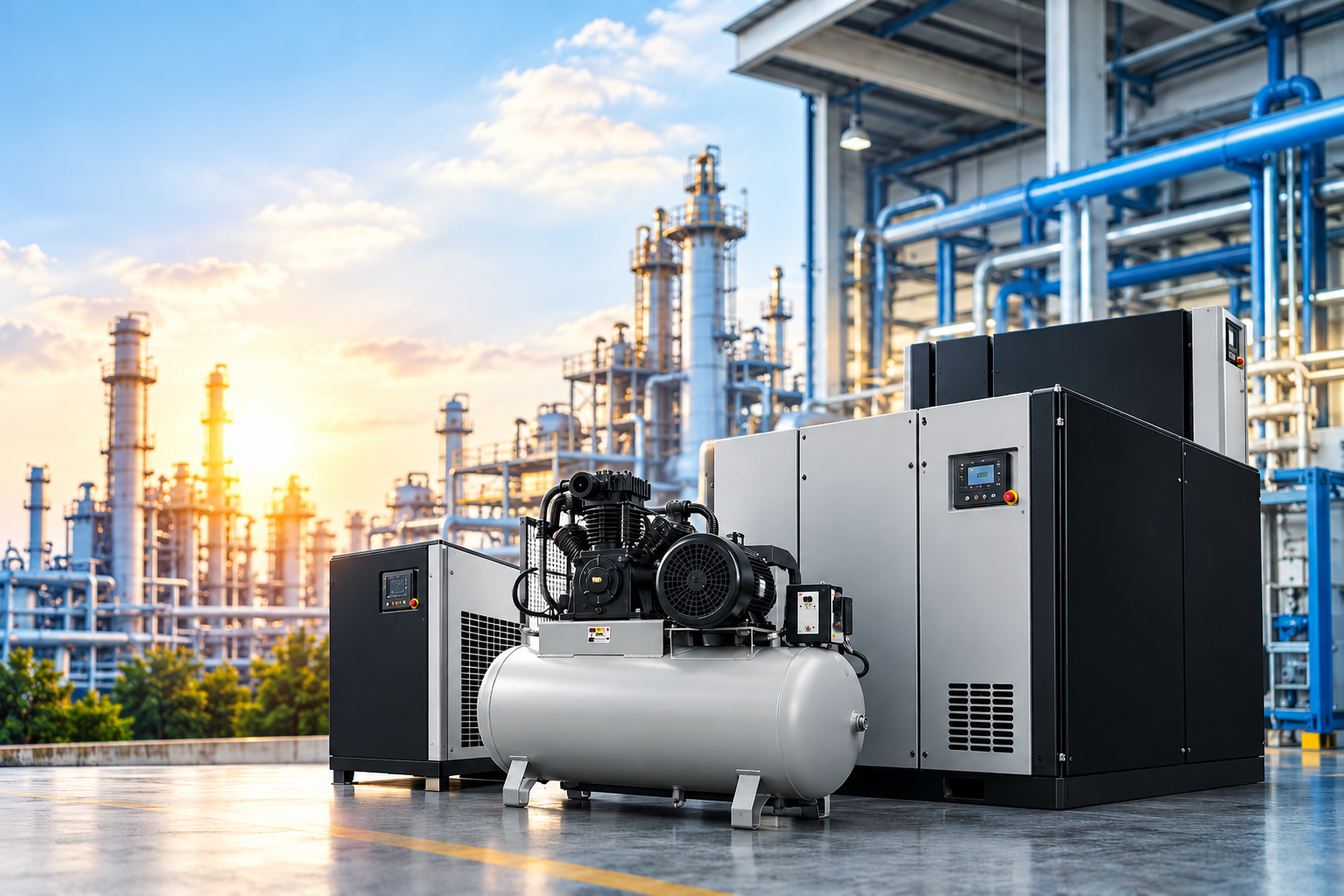

The Key Decisions Behind Choosing the Right ELGi Air Compressor
Elgi Air Compressor Dealers in Chennai
“Choosing an air compressor is not about bigger power, but the right power for the job.”
What happens when an air compressor is chosen based on price alone? The machine may run, but it may not necessarily match the pressure, air demand, operating hours, or application it is expected to handle. Choosing the right compressor involves a series of practical decisions, from understanding actual air consumption to considering energy use, installation space, maintenance, and future requirements. In this blog, we will explore the key decisions behind choosing the right ELGi air compressor and look at the factors that can help businesses select a system that suits their operations. For organisations comparing Elgi Air Compressor Dealers in Chennai, understanding these basics can make the selection process more informed and application-focused from understanding actual air consumption involves a series of practical decisions, from understanidng actual air consumption
Understanding Your Air Demand
Understanding Your Air Demand
Before selecting an air compressor, it is essential to know the amount of compressed air required for the operation. The air requirements vary with the machines, tools, and production processes and can vary with the number of systems running simultaneously. If a business is looking to buy a compressor, it will be better to actually see how much it is being used than to just take a wild guess.
Air demand should be considered for normal working conditions and at times of increased usage. This provides a better idea of the compressor's required performance.
Start by checking:
- ⚙️ Air-consuming equipment: Identify machines, tools, and processes that require compressed air.
- ⚙️ Flow requirement: Determine the quantity of compressed air that is required for each application during operation.
- ⚙️ Concurrent use: Take into account the possibility of multiple air-consuming devices being used concurrently.
- ⚙️ Peak demand: Take into consideration time periods during which air usage temporarily spikes.
- ⚙️ Future use: When selecting a system, take into account how it will be used in the future to ensure that it is not taken beyond its appropriate range.
Getting the Capacity Right
The actual capacity of the compressor should be determined according to the load and not by its size or motor rating. The capacity is adequate for the production required without continually straining or running the equipment too much above its design capacity. Under-capacity and over-capacity can both be a problem in the use of the system.
Capacity selection involves:
- ⚙️ Required air flow: Ensure that the total demand of all equipment that is connected to the compressor is matched.
- ⚙️ Operating conditions: Determine if the compressor will be used occasionally, regularly, or continuously.
- ⚙️ Peak load: Permit brief bursts of higher-than-normal air usage.
- ⚙️ Duty cycle: Be aware of how many times the compressor will load, unload, or run in a working day.
- ⚙️ Expansion margin: Allow for future growth requirements without building up too much "padding".
Choosing the Suitable Compressor Type
Not all compressors are created equal, and not all are suitable for all applications. The operating principles are different for various air demand, pressure, operating time, and working environment. Changing the type according to the actual application can make more of a difference than just picking a common type.
The use of the compressed air and the operating pattern the system will have should be taken into consideration. This assists in linking the gear selection to actual job requirements.
Choices of type can be based on:
- ⚙️ Application requirements: Determine if the compressor is for production equipment, tools, automation, or other applications.
- ⚙️ Hours of operation: Continuous use may be different from occasional use.
- ⚙️ Requirements for output: The choice of compressor technology should be determined by the airflow and pressure requirements.
- ⚙️ Installation environment: Space, temperature, dust, ventilation, and surrounding conditions may affect suitability.
Matching Pressure to the Application
Flow is not the only component that defines compressed air systems. These may vary from machine to machine and from process to process to get the machine to function properly. Too little pressure can have a negative impact on equipment performance; too much can result in higher energy consumption without added value.
When planning pressure, take into account:
- ⚙️ Equipment requirement: Determine the kind of pressure indicated by the tool and equipment connected.
- ⚙️ Minimum operating level: Make sure that during normal demands, the system has an adequate pressure.
- ⚙️ Distribution losses: Take into consideration pressure loss in the piping, filters, dryers, etc. during distribution.
Looking at Energy Consumption
With a compressor running for many hours, it is important that energy is being used correctly, as it plays a significant part in the overall cost of its operation. Compressor size, operating pressure, load profile, system efficiency, and management all have an impact on electricity consumption. Relying solely on the cost of the equipment can therefore fail to account for a substantial proportion of the cost of the equipment over its lifetime.
Energy considerations include:
- ⚙️ Power consumption: Discuss electrical power consumption under various operating conditions.
- ⚙️ Load pattern: Knowledge of the compressor operating time under load and when unloaded.
- ⚙️ Pressure setting: Do not set unnecessarily high pressures, as they maycause extraa energy consumption.
- ⚙️ Operating schedule: Consider how many hours per day and days per week the compressor will run.
Considering Available Installation Space
The compressor can be at the heart of the air system, but it must fit into the facility without causing any practical issues. Before installation, the space available, ceiling height, ventilation, access routes, and service clearance should be taken into account. If a machine is physically in place but can't be accessed effectively for maintenance, this can cause issues down the road.
Check the installation area for:
- ⚙️ Installation: Ensure that the compressor can be installed without interfering with other operations.
- ⚙️ Service clearance: Leave adequate space around the machine for inspection/ maintenance.
- ⚙️ Ventilation: Ensure suitable ventilation around equipment as per installation requirements.
- ⚙️ Access Route: Ensure that the compressor can be put in place and can be accessed if needed.
Checking Maintenance and Service Needs
“The right compressor works behind the scenes, keeping everyday production moving.”
To keep a compressor running as well as it was designed, it must be maintained. Depending on the equipment and operating conditions, other parts of the system such as filters, coolers, connections, and lubricants might need to be inspected or serviced. Before making a purchase, it's important to be aware of maintenance needs to ensure that businesses are prepared for the long-term responsibility of operating the system.
Planned maintenance can consist of:
- ⚙️ Regular inspections: Make routine inspections to find out if there are signs of wwear leaking, contamination or other problems.
- ⚙️ Filter Servicing: Filters should be serviced based on equipment's operating conditions and recommended maintenance schedule.
- ⚙️ Lubricant management: If applicable, proper lubricant and lubricant change intervals should be adhered to.
- ⚙️ Access for spare parts: Common components should be readily available for replacement when necessary.
Planning for Long-Term Performance
The selection of an air compressor must not be confined to the sole need for the immediate production. It can be used in the facility for a number of years, and there are several factors to consider before finalizing the purchase: reliability, operating conditions, maintenance, efficiency and future changes. A machine which works for today's job might not be able to meet the needs of tomorrow's task.
- ⚙️ Service life expected: Consider the equipment design to see how it works in the conditions it is used.
- ⚙️ Future expansion: Allow for possible increase in production or add air consuming equipment.
- ⚙️ Replacement planning: Be familiar with the maintenance and component replacement needs for the working life of the equipment.
Also Read This:
- How to Choose the Perfect Air Compressor for Your Industry
Choosing Air Power With Purpose
Choosing an air compressor becomes easier when the decision starts with the actual needs of the operation rather than with a model name or price tag. Air demand, capacity, pressure, energy consumption, installation conditions, maintenance requirements, and future expansion all have a role in determining whether a system will work effectively over time. A well-matched compressor can support smoother production while helping businesses manage operating costs and service requirements more practically. By understanding these factors and exploring suitable options from experienced Elgi Air Compressor Dealers in Chennai, businesses can make a more informed choice and build a compressed air system around the way they actually work.
Frequently Asked Questions
Everything you need to know about Elgi Air Compressor Dealers in Chennai
1. How do I know what air compressor capacity my business needs?
Start by calculating the compressed air demand of all connected equipment, including machines that may operate at the same time. Peak demand, operating hours, and possible future expansion should also be considered.
2. Why is operating pressure important when choosing an ELGi air compressor?
Different applications require different pressure levels. Choosing a compressor that matches the required operating pressure can help equipment perform as intended while avoiding unnecessary energy consumption.
3. Does compressor type depend on how often the machine is used?
Yes. Occasional, intermittent, and continuous applications can have different equipment requirements. Operating hours, workload, and the type of application should be considered when selecting the compressor technology.
4. What should I consider when installing an air compressor?
Check the available floor space, ventilation, service clearance, electrical requirements, piping connections, drainage, and access for maintenance before finalising the installation location.
5. How can I choose suitable ELGi air compressor dealers?
Look for dealers who can understand your air requirements, explain suitable compressor options, provide installation assistance, and support maintenance or service needs. Comparing options from experienced Elgi Air Compressor Dealers in Chennai can help you select equipment based on your actual application and operating conditions.